Car loan check before the car becomes your problem.
Make sure no lender has a claim on the car, then check its history by VIN: mileage and accident records where available, theft and recalls. Full report ₦9,900.
900M+ Vehicles in database
₦9,900 Full report
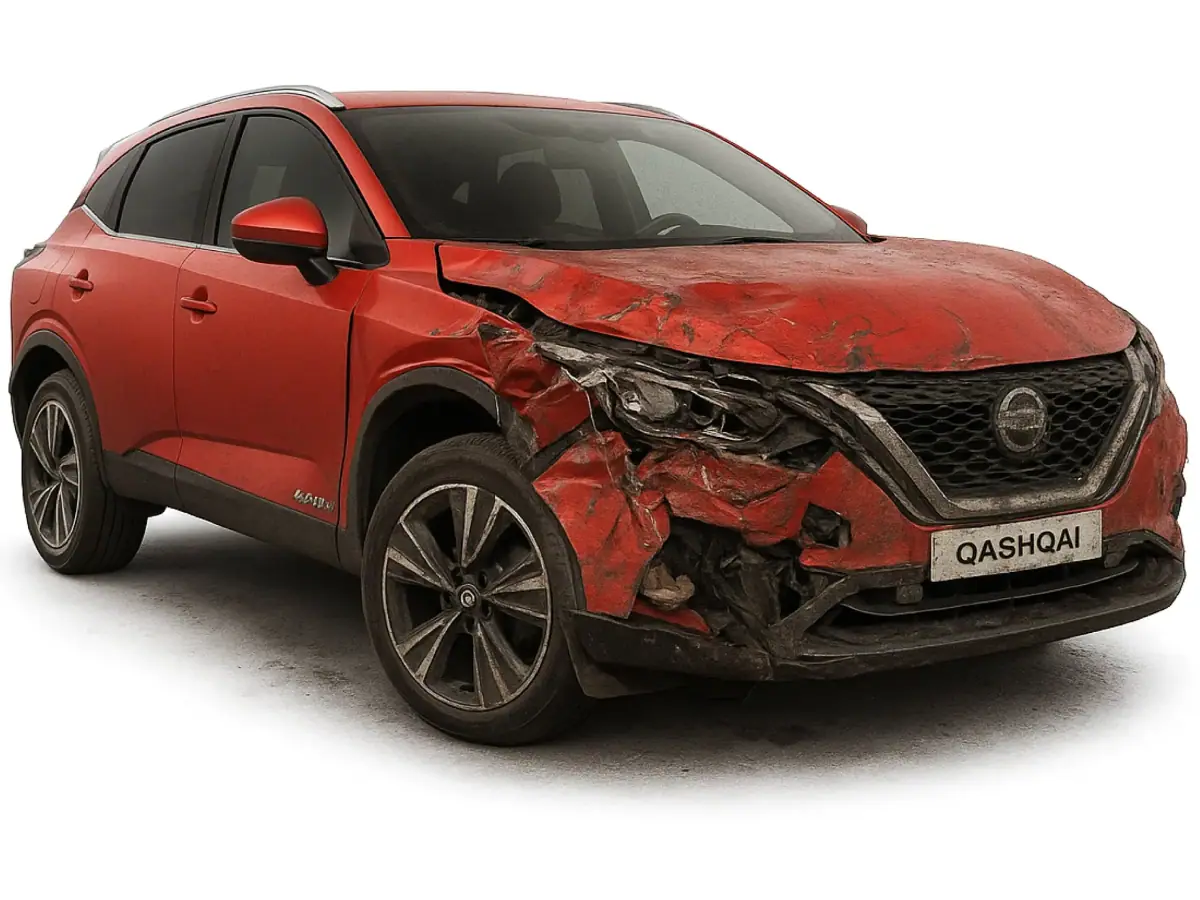
In Nigeria, a lender that finances a car can register its security interest in the National Collateral Registry run by the Central Bank. Buyers can search that registry and should ask for the lender's release letter before paying. Carlytics does not hold loan data; it checks the car's VIN against 900+ million records in US, EU and worldwide databases for its history. Full reports ₦9,900.
Why a loan on a used car matters to the buyer
A car bought on credit can be sold before the loan is cleared. The buyer is the one left holding the risk.
When a bank or finance company lends money for a car, it usually takes the car as security. If the borrower sells the car before the loan is paid, the lender's interest does not disappear because the car changed hands. A buyer who pays without checking can end up with a car someone else has a claim on.
Sellers rarely mention it. Some do not know their loan agreement covers the car; some hope the buyer will not ask. The checks below take little time and cost far less than the problem they prevent.
Search the National Collateral Registry
The registry where lenders record security interests in movable assets, including vehicles.
The National Collateral Registry is a web-based system run by the Central Bank of Nigeria. It puts the Secured Transactions in Movable Assets Act 2017 into practice: lenders register their security interests, and anyone can search the registry to find out whether an asset is already pledged. A public user does not need an account; you pay the search fee online and use the payment code to search.
Have the car's details ready, including the 17-character VIN from the windscreen and the papers, and the seller's details. The search tells you whether a security interest is registered. It does not show how much is owed: for that, the seller must get a statement or a release letter from the lender.
The papers to ask for
A seller who owned the car outright can show it. A seller who financed it should have a release.
Proof of ownership in the seller's name
The name on the proof of ownership should be the seller's. If it is a company or a bank, ask why. A car still registered to a lender is not yet the seller's to sell.
Release letter from the lender
If the car was financed, ask for the lender's letter confirming the loan is fully paid and the security released. Call the lender on a number you find yourself, not one on the letter, to confirm it.
The same chassis number everywhere
The proof of ownership, vehicle licence, customs papers and release letter must all carry the chassis number on the car. Our chassis number check shows where to find it.
What the VIN check covers instead
A loan is one risk. The car's past is another, and the papers do not show it.
Carlytics does not check loans or liens. What the report does is read the VIN for the car's life before Nigeria: dated mileage records where available, accident and damage records where available, a theft check and recalls. A car with a clean loan position can still have a wound-back odometer or a flood history. See the car mileage check, the VREG verification guide and the used car checklist.
If you are taking a loan yourself to buy the car, the same checks protect you twice: once as the buyer, and again as the borrower whose loan is secured on a car that must be worth what you are paying. The car value check explains how to judge the price.
Official checks worth doing in Nigeria, and what they show
Each official check covers one part of the car's story. Do them alongside the report.
| Check | What you enter | Where | What it shows |
|---|---|---|---|
| Customs duty status | The VIN | Nigeria Customs CVMS (cvms.nigeriatradehub.gov.ng) | Whether the vehicle was cleared through customs, with an official receipt. A paid service. |
| National vehicle registry | The VIN | VREG, Federal Ministry of Finance (vreg.gov.ng, USSD *7031#) | Whether the VIN is registered on VREG, and its duty status. |
| Number plate | The plate number | FRSC NVIS (nvis.frsc.gov.ng) | Whether the plate matches the FRSC record. |
| Police vehicle certificate | Owner and vehicle details | Nigeria Police e-CMR (cmris.npf.gov.ng) | The police Central Motor Registry certificate the owner should hold. |
What the official checks leave out
Each check covers one record. None of them puts a car's dated history from Europe, the US or China next to its Nigerian papers. That is the part the report adds.
Official checks and a Carlytics report side by side
| Topic | Official checks | Carlytics report |
|---|---|---|
| Mileage | Not shown | Dated mileage records for the VIN, where available, from several countries |
| Accidents and damage | Not shown before purchase | Accident and damage records where available for the VIN |
| Customs duty | CVMS or VREG | Not included: confirm it there |
| Theft | Police certificate held by the owner | Stolen-vehicle databases from the US, the EU and worldwide |
| Specification | Not shown | Factory decode from the VIN |
One Carlytics report costs ₦9,900, with a free preview first.
What the report shows, alongside your loan checks
Here is what to expect from a ₦9,900 report on a car with a 17-character VIN.
In the report
- A factory decode: make, model, model year, engine, fuel, body style and plant.
- Dated mileage records where available for the VIN, from the countries the car lived in.
- Accident and damage records where available for the VIN, for example salvage and write-off titles and auction damage classifications.
- A check against stolen-vehicle databases from the US, the EU and worldwide.
- Safety recall campaigns recorded for the make, model and year.
- Market value, known model issues and running-cost context.
Before you check
- Have the 17-character VIN ready. It is on the windscreen, the door pillar and the customs papers; a plate number alone is not enough.
- Confirm the customs duty status on Nigeria Customs CVMS or on VREG. The report does not cover customs duty.
- Book an independent mechanic to inspect the car before you transfer any money.
No record found is not proof that a car is undamaged or that its mileage is correct.
Loan, papers, history: in order
Five steps before any transfer.
- 1
Search the registry
National Collateral Registry for a registered security interest.
- 2
Ask for the release
A lender's letter if the car was ever financed; confirm it by phone.
- 3
Match the papers
Proof of ownership in the seller's name, same chassis number everywhere.
- 4
Check the VIN
Decode, then mileage and accident records where available.
- 5
Inspect, then pay
Only when the loan, the papers and the car are clear.
Trusted in 47+ countries, including the ones Nigeria imports from
Carlytics brings together vehicle records from 47+ countries, with 900M+ vehicles in its database, across Europe and North America, plus factory decoding for cars built in China, Japan and Korea. For a tokunbo car, that is where its earlier life was recorded.
Access data from national registries,
insurance databases, law enforcement and more.

How It Works
Carlytics checks a 17-character VIN in seconds by cross-referencing 900M+ records from 47+ countries. Enter the VIN from the windscreen, the door pillar or the customs papers, check the free preview, then unlock the full vehicle history report for ₦9,900.
From VIN to report in a few minutes. Check the free preview before you pay.
Enter the VIN
Type the 17-character VIN (chassis number) from the car or its papers. A Nigerian plate number is not enough on its own.
Check the preview
Confirm the make, model and year match what the seller told you before you pay anything.
Get the full report
Mileage and accident records where available, theft, recalls and value, in one report with a PDF you can forward.
Decide with evidence
Take the report to the inspection, ask the seller about every gap, and only then transfer money.
Why check a VIN before buying a car in Nigeria?
Nigeria spent ₦1.58 trillion importing passenger cars in 2025, and most of them arrived used. A car's history abroad does not follow it to Nigeria on paper; it follows it through the VIN.
Mileage on tokunbo cars
An odometer can be wound back between the last reading abroad and the sale in Nigeria. Dated mileage records, where available, show whether the dashboard fits the car's past.
Accidented and flood cars
Salvage and flood cars are bought cheaply abroad, repaired and sold here as clean tokunbo. Accident and damage records, where available, show what happened before the car was shipped.
Stolen abroad
Vehicles stolen in Canada have been traced to Nigeria and handed back to their owners. A theft check before payment protects you from losing the car and your money.
Year and model on the papers
Customs rules and duty depend on the year of manufacture and the exact model. The decoded year and specification help you test what the papers say.
Ready to check your vehicle?
Enter the VIN number below to get a free instant report.
Sample Vehicle Report
Every Carlytics report covers 24 sections including decoded specs, mileage history, safety recalls, theft status, market value, and cross-border import records. The full report costs ₦9,900 and is available instantly as an interactive page and downloadable PDF.
Here's an example of the comprehensive vehicle report you'll receive. Our reports provide detailed information to help you make informed decisions about any vehicle.
Toyota Corolla (2012)
1.8 L • Petrol • Automatic • Sedan
Vehicle Information
Official records
Vehicle Summary
Frequently Asked Questions
How do I know if a used car in Nigeria still has a loan on it?
What is the National Collateral Registry?
Does the registry show how much is owed?
Can Carlytics check for an outstanding car loan?
What happens if I buy a car that still has a loan on it?
Should I finance a used car myself?
How much is the VIN report?
Last updated